
If you have ever seen “FR” 💬 in a text, chat, or social media comment, you may have wondered what it means. In most online conversations, FR means “for real.” People use this common texting abbreviation 📱 to show that they are being serious, honest, or strongly agree with something. The FR full form in chat is simple, but its meaning can change slightly depending on the conversation. You may also see FR?, which can mean “Really?” or “Are you serious?”
You may also come across FRFR 🔥, which means “for real, for real.” People use it to add extra emphasis to what they say. In this guide, we’ll explain what FR means in text, how people use it in chats and social media, what FRFR means, and how to understand FR correctly from context.
Quick Answer: What Does FR Mean in Text?
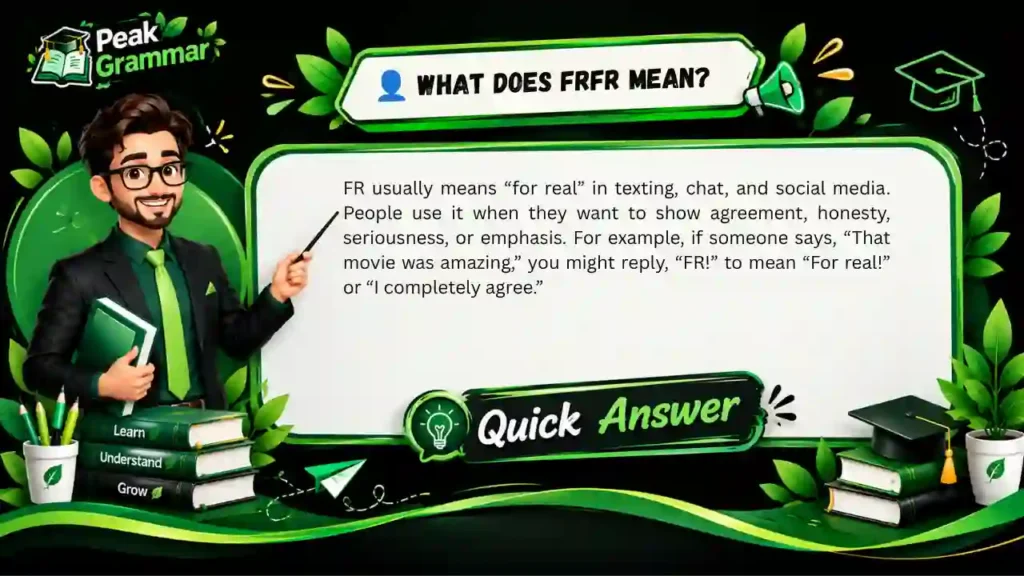
FR usually means “for real” in texting, chat, and social media. People use it when they want to show agreement, honesty, seriousness, or emphasis. For example, if someone says, “That movie was amazing,” you might reply, “FR!” to mean “For real!” or “I completely agree.”
The meaning can change slightly with punctuation and context. “FR!” 👍 usually shows agreement, while “FR?” 🤔 can mean “Really?” or “Are you serious?” You may also see FRFR, which means “for real, for real” and gives the statement even more emphasis.
TL;DR: FR Meaning at a Glance
- 💬 FR = For Real
- 📱 It is common in texts and chats
- 👍 It can show agreement
- ❤️ It can show sincerity or honesty
- 🔥 It can add emphasis
- 🤔 FR? can mean “Really?” or “Are you serious?”
- 💯 FRFR = For Real For Real
- 🌐 People use FR on social media, DMs, comments, and group chats
- ⚠️ FR is informal slang, so avoid it in formal writing
You Might Also Like That: FT Meaning
What Does FR Stand For?
The FR full form in chat is “for real.” People shorten the phrase to FR because texting encourages quick, simple communication. Instead of typing the complete phrase, users can write two letters and still express the same idea.
The abbreviation works as texting slang, internet slang, and a casual chat abbreviation. You can see FR at the beginning or end of a sentence, or you can use it alone as a reply. Although “for real” can have several uses in normal English, FR as an abbreviation mainly appears in informal digital conversations.
What Does FR Mean in Texting and Chat?
FR meaning in text usually depends on what the person wants to express. Someone may use FR to agree with another person, confirm that they mean something, or make a statement sound stronger. For example, “I need a vacation fr” means the person really needs a vacation.
You can also find FR in chat, messages, DMs, comments, and group conversations. Its basic meaning stays connected to “for real,” but the tone can change. A short “FR!” may show strong agreement, while “FR?” may show surprise or doubt.
FR as Agreement
People often use FR 👍 to show that they agree with another person’s opinion. For example, if someone writes, “This week went by so fast,” you can reply, “FR!” to mean “For real, I agree.” In this use, FR works almost like “exactly,” “seriously,” or “that’s true.”
You may also see phrases such as “FR, you’re right” or “That was difficult fr.” These examples show how FR slang can support agreement without needing a long reply. It is especially common in casual texting, social media comments, and online conversations between friends.
FR as Emphasis or Sincerity
FR can also add emphasis 🔥 to a statement. When someone writes “I’m tired fr,” they want to make it clear that they are really tired. In this context, FR adds a feeling of seriousness or sincerity.
People also use it to show that they genuinely mean what they say. For example, “You should try this place fr” means the person really recommends it. This use makes FR useful when someone wants to sound honest, serious, or strongly convinced without using formal language.
FR as a Reaction or Question
When someone writes “FR?” 🤔, the question mark changes the tone. Instead of simply agreeing, the person may ask “Really?”, “Seriously?”, or “Are you serious?” The surrounding conversation helps you understand the exact meaning.
For example, if someone says, “I just won the competition,” another person might reply, “FR?” This response shows surprise and asks for confirmation. Therefore, FR meaning with a question mark differs from a simple “FR!” Knowing this small difference can help you understand FR correctly in real conversations.
FR Meaning With Examples
Real examples make FR meaning in text easier to understand. People rarely use slang according to a strict rule, so the sentence around FR matters. Here are some simple examples:
| Text Example 💬 | Meaning |
| “That movie was amazing fr.” | Seriously / genuinely |
| “FR, I agree with you.” | I really agree |
| “You finished it already? FR?” | Really? |
| “I’m exhausted fr.” | I’m genuinely exhausted |
| “FR! That was so funny.” | I completely agree |
These examples show why context matters when you see FR in a message.
What Does FRFR Mean?
FRFR means “for real, for real.” It comes from repeating FR to add stronger emphasis. When someone writes FRFR, they usually want to show that they are very serious, completely honest, or strongly agreeing with something.
For example, “That was the best concert ever FRFR” means the person really, really believes the concert was excellent. You may see FRFR meaning in text, comments, DMs, and other online conversations. It is even more casual than FR, so people mainly use it with friends and other informal audiences.
FR vs FRFR: What Is the Difference?
The main difference between FR and FRFR comes from emphasis. Both expressions connect to “for real,” but FRFR makes the feeling stronger.
| Slang | Full Form | Common Use |
| FR 💬 | For Real | Agreement or emphasis |
| FRFR 🔥 | For Real For Real | Strong agreement or extra emphasis |
For example, “That game was fun FR” sounds like a normal strong opinion. “That game was fun FRFR” sounds even more intense. You do not need FRFR every time you want to agree. Choose it when you want your message to sound extra serious or enthusiastic.
How Is FR Used on Social Media?
You can see FR on social media 🌐 across many platforms. People use it in TikTok comments, Instagram DMs, Snapchat messages, Discord chats, posts, and group conversations. The basic meaning remains “for real,” even though the surrounding conversation may change.
For example, someone might comment “FR 😂” under a post because they strongly agree with it. Another person might write “That trend is getting old fr” to emphasize their opinion. Because FR works well as a short reaction, it fits naturally into fast-moving online conversations and social media comments.
What Does FR Mean Depending on Context?
The meaning of FR in context becomes easier to understand when you look at the words around it. Ask yourself whether the person is agreeing, confirming something, showing surprise, or making a statement more serious.
- 👍 Agreement: “FR!” = I agree.
- 💯 Confirmation: “That’s true fr.” = That’s genuinely true.
- 🔥 Emphasis: “I love this fr.” = I really love this.
- 🤔 Question: “FR?” = Really?
- 😮 Surprise: “You met him? FR?” = Seriously?
This simple approach helps you understand the intended meaning without guessing.
What Does FR Mean From a Girl or Guy?
If a girl or guy sends you FR, the abbreviation itself does not automatically have a romantic meaning. In most cases, FR simply means “for real.” The person’s message and the conversation around it matter much more than who sent it.
For example, “FR, you look great” could simply show agreement or sincerity. In a dating or relationship conversation ❤️, the same abbreviation can make a statement sound more genuine, but FR alone does not prove flirting or romantic interest. Always consider the full conversation before giving the message a deeper meaning.
Is FR Formal or Informal?
FR is informal texting slang 📱, so you should mainly use it in casual communication. It works well in text messages, DMs, social media comments, group chats, and conversations with friends.
However, you should usually avoid FR in formal emails, academic assignments, business reports, and professional documents. In those situations, write the complete phrase or choose clearer formal language. For example, instead of writing “FR, I agree,” a professional message could say, “I completely agree.” Knowing when to use FR and when not to use FR helps you communicate more clearly.
Other Meanings of FR
Although “for real” is the main FR meaning in texting, the abbreviation can have other meanings in different contexts. For example, FR may refer to France or French in some situations. Some online communities may also use FR for terms such as friend request.
This does not mean you should assume every FR has a different meaning. If you see FR in a text message, chat, DM, or social media comment, “for real” is usually the most relevant interpretation. Always check the surrounding words before choosing another meaning.
How to Reply When Someone Says FR
Your reply to FR 💬 depends on the message. If someone uses FR to agree with you, you can simply continue the conversation. Natural responses include:
- 👍 “Exactly!”
- 💯 “I know, right?”
- 😂 “FR!”
- 🔥 “Seriously!”
- ❤️ “That’s what I’m saying.”
If someone writes “FR?”, they may be asking for confirmation. In that case, answer clearly with something like “Yeah, seriously” or “Yes, for real.” A short response often works best because FR itself belongs to casual texting language.
Common Mistakes People Make About FR
People sometimes misunderstand FR because they focus on the abbreviation instead of the context. One common mistake is assuming FR always means agreement. Remember that FR? can express surprise or doubt. Another mistake involves treating FR as formal language when it is actually casual slang.
You should also avoid assuming that FR automatically has a romantic meaning ❤️ when someone sends it. Finally, do not confuse FR with FRFR. Although both relate to “for real,” FRFR adds stronger emphasis. Looking at the complete message usually removes most confusion.
FR vs Other Common Texting Abbreviations
FR belongs to a larger group of popular texting abbreviations 📱. Comparing similar expressions can help you understand the tone behind each one.
| Abbreviation | Full Form | Common Meaning |
| FR | For Real | Seriously / I agree |
| FRFR | For Real For Real | Strong emphasis |
| TBH | To Be Honest | Giving an honest opinion |
| NGL | Not Gonna Lie | Introducing honesty |
| IMO | In My Opinion | Sharing an opinion |
| IDK | I Don’t Know | Showing uncertainty |
These abbreviations can appear together, but each one serves a different purpose.
FAQs About FR Meaning
What does FR mean in text?
FR usually means “for real.” People use it to show agreement, sincerity, seriousness, or emphasis.
What does FR stand for in chat?
FR stands for “for real.” It is a common informal abbreviation used in chats and texts.
What does FRFR mean?
FRFR means “for real, for real.” It adds stronger emphasis to the idea of being serious or genuine.
What does FR? mean in texting?
FR? can mean “Really?”, “Seriously?”, or “Are you serious?” depending on the conversation.
Is FR slang?
Yes. FR is informal internet and texting slang, so people mainly use it in casual digital conversations.
Is FR formal or informal?
FR is informal. Avoid using it in academic, professional, or other formal writing.
What does FR mean from a girl or guy?
It normally still means “for real.” The surrounding conversation determines whether the message carries any additional meaning.
Final Thought
FR means “for real” in most texting, chat, and social media conversations. People use it to show agreement, sincerity, seriousness, or emphasis, while FR? can ask “Really?” or “Are you serious?” You may also see FRFR, which means “for real, for real” and adds extra emphasis.
The easiest way to understand FR meaning in text is to look at the complete message and its tone. Once you understand the context, this simple two-letter abbreviation becomes easy to recognize and use in everyday online conversations.