In this guide, we will explain the difference between scrap and scrape with clear definitions, practical examples, and common sentences. You will also learn how to use scrap and scrape correctly, understand scrapped vs. scraped, and avoid common mistakes. Whether you are writing an email, completing an assignment, or speaking English, this guide will help you confidently decide when to use scrap or scrape.
Quick Answer
The main difference between scrap and scrape is their meaning and action. Scrap means to discard, cancel, abandon, or get rid of something. It can also mean a small leftover piece of material, such as scrap paper or scrap metal. Scrape, on the other hand, means to rub, scratch, or remove something from a surface. For example, you can scrap a plan, but you scrape paint from a wall.
A simple way to remember the difference is this: 🗑️ Scrap = throw away or cancel, while 🧽 Scrape = rub or remove from a surface. These words may look similar, but you should not use them interchangeably.
TL;DR
Scrap and scrape have different meanings. 🗑️ Scrap means to discard, cancel, abandon, or refer to a leftover piece, while 🧽 scrape means to rub, scratch, or remove something from a surface. For example, you can scrap a plan, but you scrape paint from a wall. Remember: Scrap = discard or cancel; Scrape = rub or remove.
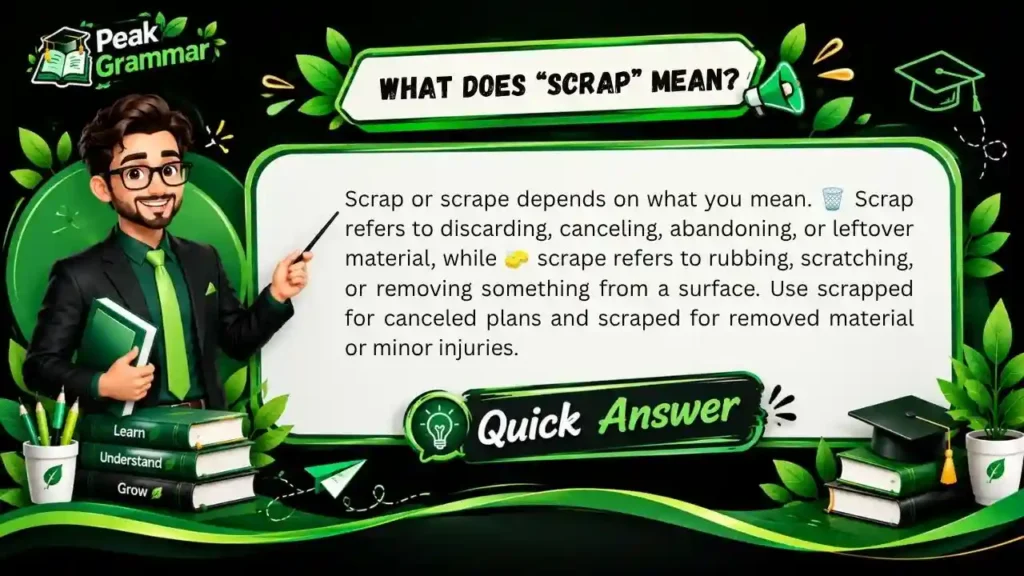
Scrap or scrape depends on what you mean. 🗑️ Scrap refers to discarding, canceling, abandoning, or leftover material, while 🧽 scrape refers to rubbing, scratching, or removing something from a surface. Use scrapped for canceled plans and scraped for removed material or minor injuries.
You Might Also Like That: TS Meaning in Text
What Does “Scrap” Mean?
Scrap has several meanings, but its most common uses involve discarding something or talking about a small leftover piece. As a noun, it can describe a small piece of material, such as a scrap of paper. It can also refer to waste material, including scrap metal or food scraps. The meaning depends on the sentence and context.
As a verb, scrap means to cancel, abandon, or get rid of something. You might scrap an old plan, project, idea, or method. In everyday English, people often use this word when they decide that something no longer works or has no useful purpose.
Scrap as a Noun
As a noun, scrap can mean a small piece or leftover part of something. For example, you might find a scrap of paper on a desk or sell old metal as scrap metal. It can also describe a small amount of something. In another meaning, scrap can refer to a short fight or argument. 📝 Examples: “I found a scrap of paper” and “The factory sold the metal for scrap.”
Scrap as a Verb
As a verb, scrap means to cancel, abandon, or throw something away. You can scrap a plan, scrap a project, or scrap an idea when you decide not to continue with it. 🚫 For example, “The company scrapped the old plan” means the company decided to stop using that plan. Remember: when you cancel or abandon something, scrap is usually the correct word.
What Does “Scrape” Mean?
Scrape usually describes an action involving rubbing, scratching, or removing something from a surface. You can scrape paint from a wall, scrape ice from a car window, or scrape mud from your shoes. The word can also describe a minor injury, such as when you scrape your knee after falling.
As a verb, scrape focuses on an action performed against a surface. As a noun, it can describe a scratch or minor injury. The word also appears in useful expressions such as scrape off, scrape away, and scrape against. 🧽 These uses make scrape different from scrap.
You Might Also Like That: LG Meaning in Text
Scrape as a Verb
As a verb, scrape means to rub something against a surface or remove something from it. You can scrape paint, scrape ice, or scrape dirt from a surface. You can also scrape your knee when your skin rubs against a rough surface. For example, “She scraped the paint off the wall.” Here, scrape describes the action of removing paint from the wall.
Scrape as a Noun
As a noun, scrape can mean a minor injury or mark caused by rubbing against something rough. For example, “He has a scrape on his knee.” 🩹 It can also describe a difficult or unpleasant situation in some expressions. The exact meaning depends on the context. Unlike scrap, the noun scrape usually connects with rubbing, scratching, injury, or a difficult situation.
Scrap vs. Scrape: Key Differences
Although scrap and scrape look almost the same, their meanings are quite different. Scrap usually connects with discarding, canceling, abandoning, or leftover material. Scrape usually connects with rubbing, scratching, or removing something from a surface. Learning this basic difference will help you choose the correct word in most situations.
| Scrap 🗑️ | Scrape 🧽 |
| Discard something | Rub or scratch something |
| Cancel something | Remove something from a surface |
| Abandon a plan | Remove paint or dirt |
| Leftover material | Minor skin injury |
| Scrap a project | Scrape your knee |
| Scrap metal | Scrape the wall |
You Might Also Like That: TS Meaning in Text
Scrap or Scrape: Which Word Should You Use?
Choose scrap when you mean cancel, abandon, discard, or leftover material. For example, “They decided to scrap the project” means they decided to cancel it. You can also say “She kept a scrap of paper.” In both cases, the word relates to something being discarded, abandoned, or left over.
Choose scrape when you mean rub, scratch, or remove something from a surface. For example, “Please scrape the mud from your shoes.” 🧹 You can also say, “He scraped his knee.” A quick rule can help: cancel or discard → scrap; rub or remove → scrape.
Scrapped vs. Scraped
Scrapped and scraped often confuse English learners because they look very similar. However, they come from different verbs. Scrapped is the past form of scrap and means canceled, abandoned, or discarded. For example, “The team scrapped the old plan.” Scraped is the past form of scrape and means rubbed, scratched, or removed something from a surface. For example, “She scraped the paint off the door.”
| Word | Meaning | Example |
| Scrapped 🗑️ | Canceled/discarded | They scrapped the plan. |
| Scraped 🧽 | Rubbed/removed | He scraped the paint off. |
Scrapping vs. Scraping
The same difference appears in the -ing forms: scrapping and scraping. Scrapping comes from scrap and means canceling, abandoning, or discarding something. For example, “The company is scrapping the old system.” Scraping comes from scrape and describes rubbing or removing something from a surface. For example, “She is scraping ice from the window.” ✏️ Remember that scrapping has a double p, while scraping keeps one p because the final silent e drops before -ing.
Common Mistakes With Scrap and Scrape
People often choose the wrong word because scrap and scrape look and sound similar. The easiest way to avoid this mistake is to focus on the action in the sentence. If you mean cancel or discard, choose scrap. If you mean rub, scratch, or remove from a surface, choose scrape.
You Might Also Like That: Best Similes for Green
Here are some common examples:
- ❌ Scrape the project. → ✅ Scrap the project.
- ❌ Scrap the paint. → ✅ Scrape the paint.
- ❌ He scrapped his knee. → ✅ He scraped his knee.
- ❌ They scraped the old plan. → ✅ They scrapped the old plan.
Scrap or Scrape in Common Expressions
Both words appear in many everyday expressions. Learning these phrases can make the difference between scrap and scrape much easier to understand. With scrap, you will often see phrases connected with plans, projects, waste, and leftover material. With scrape, common phrases usually describe surfaces, injuries, or difficult actions.
Common Expressions With “Scrap”
Some useful expressions include:
- 🗑️ scrap a plan
- scrap a project
- scrap an idea
- scrap metal
- scrap paper
- food scraps
- a scrap of paper
For example, “The manager decided to scrap the old plan.”
Common Expressions With “Scrape”
Common expressions include:
- 🧽 scrape off
- scrape away
- scrape against
- scrape your knee
- scrape the paint
- scrape the ice
- scrape dirt from a surface
For example, “Please scrape off the mud before you enter.”
You Might Also Like That: Similes for Strong
How to Remember the Difference Between Scrap and Scrape
You do not need a complicated grammar rule to remember scrap vs. scrape. Just connect each word with its main action. Think of scrap as a 🗑️ discarding word. You scrap something when you decide to cancel it, abandon it, or throw it away. You can also use it for something left over, such as scrap paper.
Think of scrape as a 🧽 surface word. You scrape something when you rub, scratch, or remove material from a surface. So remember this simple rule: SCRAP = discard or cancel. SCRAPE = rub or remove. This memory trick can help you use both words correctly.
Scrap or Scrape in Real-Life Sentences
Real-life examples make the difference much easier to understand. In a workplace, you might scrap a project that no longer has value. At home, you might scrape paint from a wall. At school, you could keep a scrap of paper for notes. After an accident, you might scrape your knee on the ground.
Here are a few more examples:
- 📋 “The company scrapped the project.”
- 📝 “I wrote the note on a scrap of paper.”
- 🧽 “She scraped the paint from the door.”
- 🩹 “He scraped his knee while playing.”
- 🚗 “I scraped the ice from the car window.”
You Might Also Like That: IYKYK Meaning
Frequently Asked Questions
What is the difference between scrap and scrape?
Scrap usually means to discard, cancel, abandon, or refer to a leftover piece. Scrape usually means to rub, scratch, or remove something from a surface. For example, you can scrap a plan but scrape paint from a wall.
Is scrap a noun or verb?
Scrap can be both a noun and a verb. As a noun, it can mean a small leftover piece, such as a scrap of paper. As a verb, it can mean to cancel or discard something.
Is scrape a noun or verb?
Scrape can also be both a noun and a verb. As a verb, it means to rub, scratch, or remove something. As a noun, it can describe a minor injury or mark.
You Might Also Like That: Pookie Meaning
Is it scrapped or scraped?
Use scrapped when you mean canceled or discarded. Use scraped when you mean rubbed, scratched, or removed from a surface.
Can scrap and scrape be used interchangeably?
❌ No. They have different meanings. Use scrap for canceling, discarding, or leftover material. Use scrape for rubbing, scratching, or removing something from a surface.
How do I remember the difference?
Use this simple rule: 🗑️ Scrap = discard or cancel. 🧽 Scrape = rub or remove.
Conclusion
The difference between scrap and scrape becomes simple once you focus on their main meanings. Scrap refers to discarding, canceling, abandoning, or leftover material, while scrape refers to rubbing, scratching, or removing something from a surface. Their past forms follow the same pattern: scrapped means canceled or discarded, while scraped means rubbed or removed.
Keep this quick rule in mind: 🗑️ Scrap = throw away or cancel. 🧽 Scrape = rub, scratch, or remove. Whether you need to scrap a plan, save a scrap of paper, scrape paint, or scrape your knee, this simple distinction will help you choose the correct word with confidence.